Where is Taj Mahal?
Taj Mahal is in Agra, India, in Asia. The game uses the reference point shown below: 27.1751°, 78.0421°. A guess within 25 km earns the full distance score before any hint deduction.
The marker represents the main mausoleum in Agra. The full Taj Mahal complex extends through gardens and subsidiary buildings.
Map loading. Coordinates: 27.1751°, 78.0421°.
The story behind the landmark
Mughal emperor Shah Jahan commissioned the Taj Mahal in memory of Mumtaz Mahal. Construction began in the 1630s; the main mausoleum was completed in 1648, with other parts of the complex completed later. Gardens, gates and red-sandstone buildings form part of the larger setting around the marble tomb.
The official architectural account explains the building's strong central axis and balanced arrangement of forms. White marble distinguishes the mausoleum from the red sandstone used elsewhere in the complex. Inside, the decorated cenotaphs mark the burials symbolically; the actual graves lie in a lower chamber.
How to recognise it
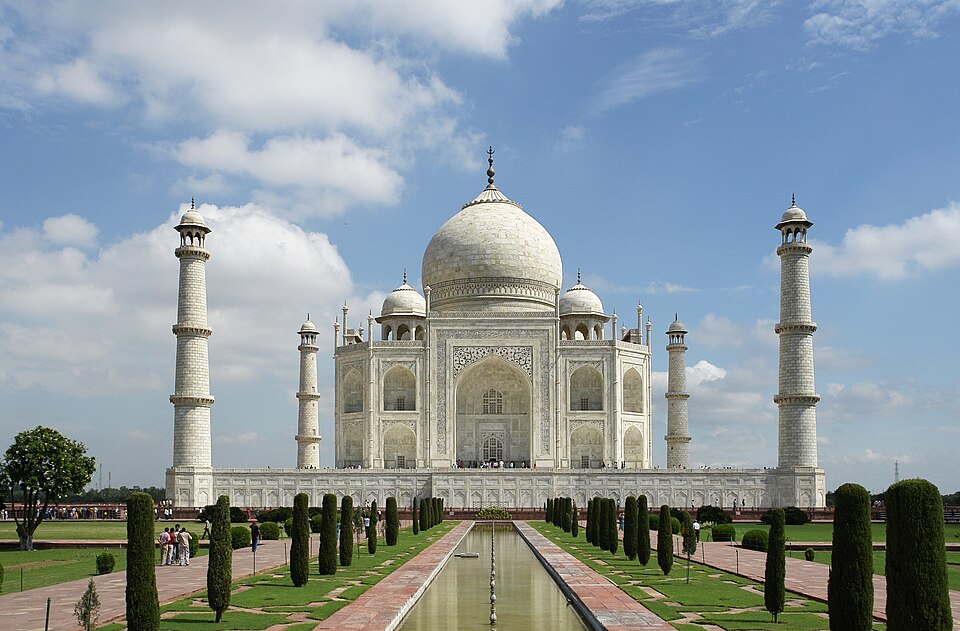
- A large white onion-shaped dome above a symmetrical façade
- Four slender freestanding minarets at the platform's corners
- A straight garden axis often photographed with a reflecting pool
Look twice: a useful comparison
Several Mughal tombs have large domes and formal gardens. Before guessing the Taj Mahal, look for white marble and four separate corner minarets. A dome by itself is insufficient. The familiar garden-front photograph also provides a stronger match than the monument's general architectural style.
A detail worth remembering
The two ornate monuments visible in the main chamber are cenotaphs rather than the actual graves. That distinction helps explain why the most photographed interior elements are carefully decorated representations of burials located on a lower level.