Where is Hawa Mahal?
Hawa Mahal is in Jaipur, India, in Asia. The game uses the reference point shown below: 26.9239°, 75.8267°. A guess within 25 km earns the full distance score before any hint deduction.
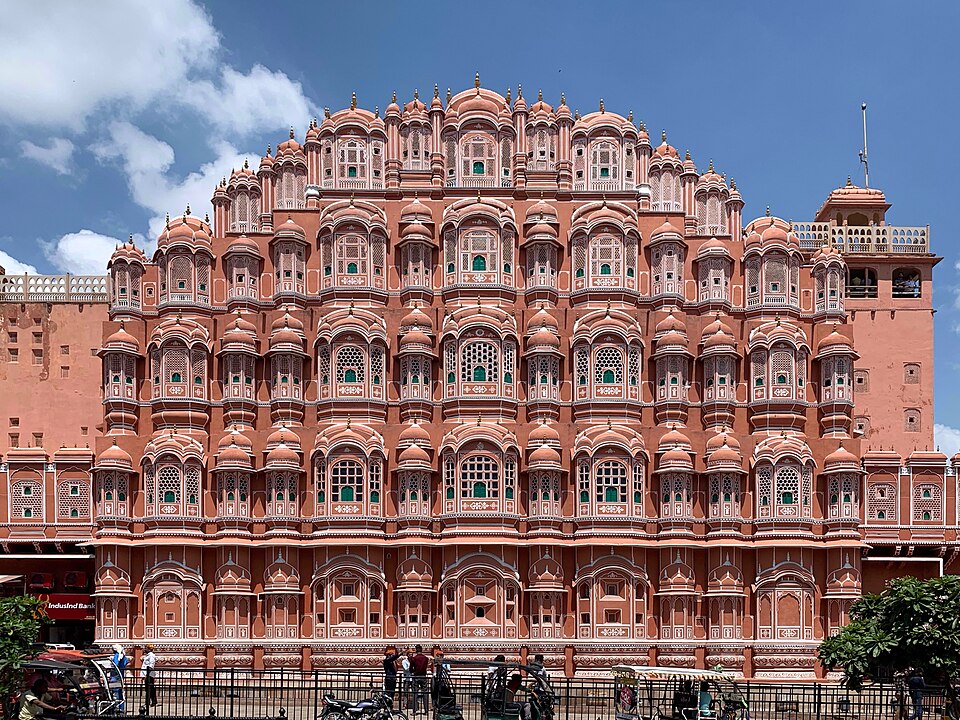
The marker represents Hawa Mahal in Jaipur's old city. The iconic façade and the rooms behind it form part of a palace complex.
Map loading. Coordinates: 26.9239°, 75.8267°.
The story behind the landmark
Sawai Pratap Singh commissioned Hawa Mahal in 1799. Rajasthan Tourism explains that its screened windows allowed women of the royal household to observe street life without being visible from outside. The building combines a practical viewing function with an unusually elaborate street-facing elevation.
India's national tourism authority identifies architect Lal Chand Ustad and describes the many jharokhas, or small projecting windows. The façade draws on Rajput and Islamic architectural traditions. Its repeated openings also contribute to air movement, making the building's name a useful memory aid for its design.
How to recognise it
- A pink sandstone façade filled with many small windows
- Five levels narrowing into a crown-like stepped outline
- Repeated projecting window bays with small curved caps
Look twice: a useful comparison
A palace or gateway elsewhere in Rajasthan may have the same pink or reddish stone. Hawa Mahal's tightly packed window bays distinguish it from Jaipur's broader palace courtyards and from larger forts. Look for the thin, screen-like façade rather than assuming every pink building is this monument.
A detail worth remembering
The windows were part of how the palace worked, not simply an ornamental pattern. Their screens allowed royal women to watch the street while remaining out of view, so the famous façade reveals a specific relationship between private rooms and public city life.