Where is India Gate?
India Gate is in New Delhi, India, in Asia. The game uses the reference point shown below: 28.6129°, 77.2295°. A guess within 25 km earns the full distance score before any hint deduction.
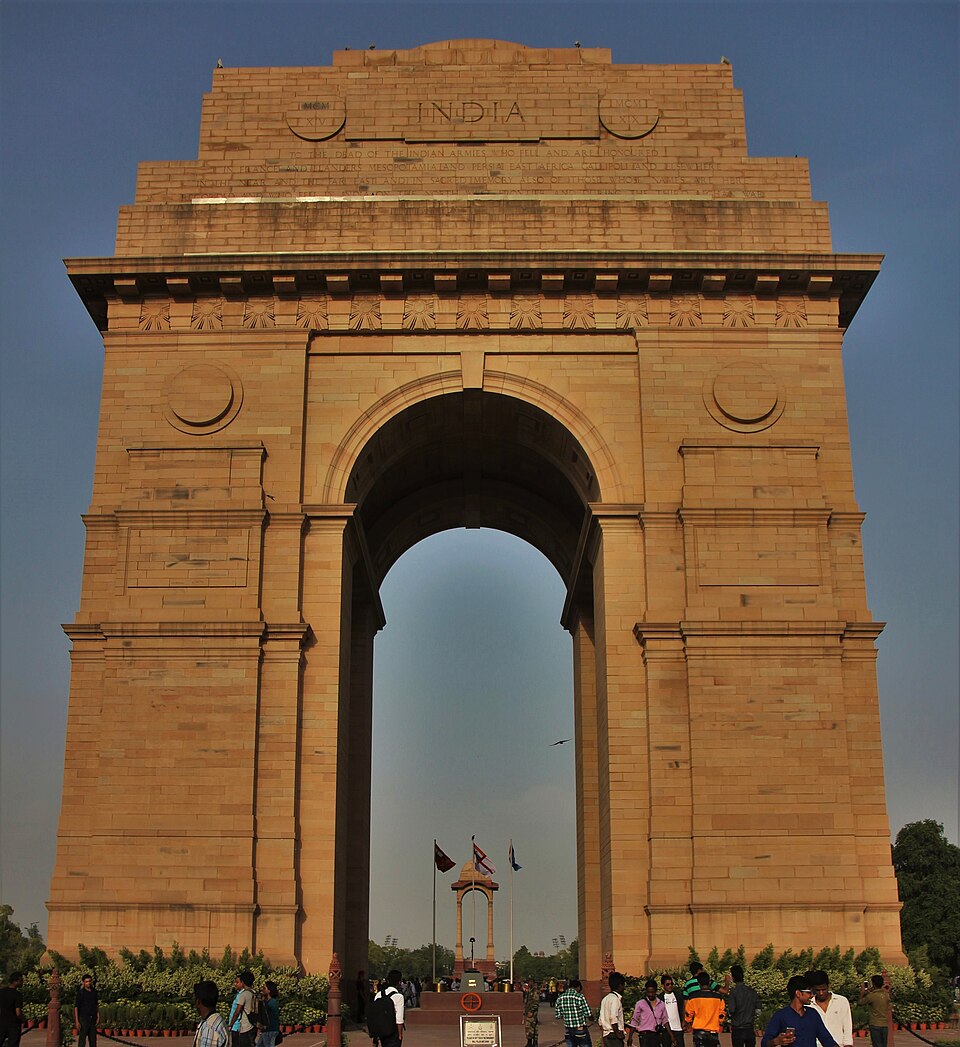
The marker identifies the India Gate arch in New Delhi, rather than the adjacent National War Memorial or the former canopy nearby.
Map loading. Coordinates: 28.6129°, 77.2295°.
The story behind the landmark
Designed by Edwin Lutyens, the memorial was dedicated in 1931 after its foundation stone was laid in 1921. It commemorates soldiers who died in the First World War and the Third Anglo-Afghan War. The names cut into its stone connect the imposing architectural form with individual lives.
The New Delhi district authority describes the arch's layered red-stone base, cornice and inscribed dates. India's National War Memorial account places it within the country's history of commemoration. Nearby memorials and later additions should not be mistaken for parts of the original Lutyens arch.
How to recognise it
- One tall sandstone arch beneath a broad rectangular upper block
- The word INDIA carved above the arch
- An open urban setting with lawns and a long ceremonial axis
Look twice: a useful comparison
Mumbai's Gateway of India faces the sea and has Indo-Saracenic details, including small turrets. India Gate has a more restrained triumphal-arch profile and stands inland in New Delhi. First identify the structure; only then use its similar name to recall the correct city.
A detail worth remembering
The memorial's façade includes the Roman-numeral dates 1914 and 1919. They help place the arch in the history of the conflicts it commemorates, and offer a more informative detail than treating the building merely as an entrance gateway.