Where is Leshan Giant Buddha?
Leshan Giant Buddha is in Leshan, China, in Asia. The game uses the reference point shown below: 29.5443°, 103.7733°. A guess within 25 km earns the full distance score before any hint deduction.
The marker identifies the Buddha at Leshan. Mount Emei is a separate component of the same World Heritage property and is not the answer location for this sculpture.
Map loading. Coordinates: 29.5443°, 103.7733°.
The story behind the landmark
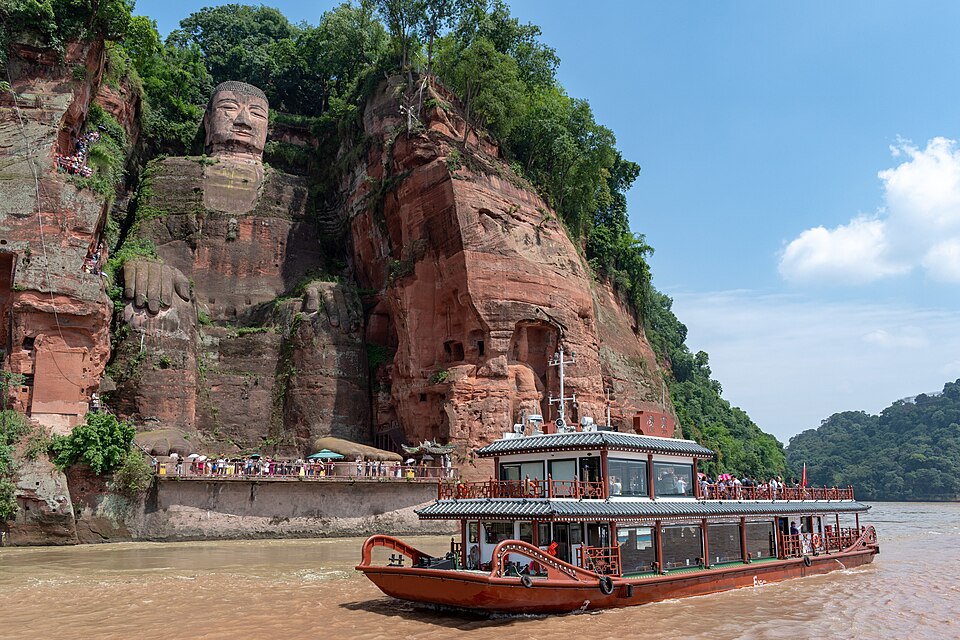
Carving began in 713 during the Tang dynasty and continued until 803. The completed figure is approximately 71 metres high. It faces the meeting of the Minjiang, Dadu and Qingyi rivers, where the hillside gives the sculpture both its material and its monumental setting.
UNESCO includes the Buddha with the Mount Emei scenic area in one World Heritage property, but the two areas are geographically separate. Its evaluation also records an inscribed contemporary account of the sculpture's creation. The figure is therefore both a work of Buddhist art and a documented historical construction project.
How to recognise it
- A huge seated Buddha cut directly from a reddish cliff
- Large hands resting on the knees beside the rock walls
- A river-facing sculpture framed by vegetation and cliffside stairs
Look twice: a useful comparison
The Great Buddha of Kamakura is bronze, much smaller and sits in an open temple courtyard in Japan. Leshan's Buddha is part of the cliff itself. Material and setting provide stronger distinctions than the shared seated pose or the general name 'Great Buddha'.
A detail worth remembering
A contemporary inscribed account survives for the Buddha's creation. It complements the visible carving by preserving a historical record of the project, illustrating how a landmark can be understood through both its physical form and written evidence.