Where is Karnak Temple?
Karnak Temple is in Luxor, Egypt, in Africa. The game uses the reference point shown below: 25.7188°, 32.6573°. A guess within 25 km earns the full distance score before any hint deduction.
The pin marks the Great Temple of Amun area at Karnak, north of Luxor Temple.
Map loading. Coordinates: 25.7188°, 32.6573°.
The story behind the landmark
Karnak developed through contributions by many Egyptian rulers across a long period. Its main precinct was dedicated to Amun, with other temple areas associated with Mut and Montu. Royal additions made the complex an accumulation of sacred spaces, rather than the creation of one king at one date.
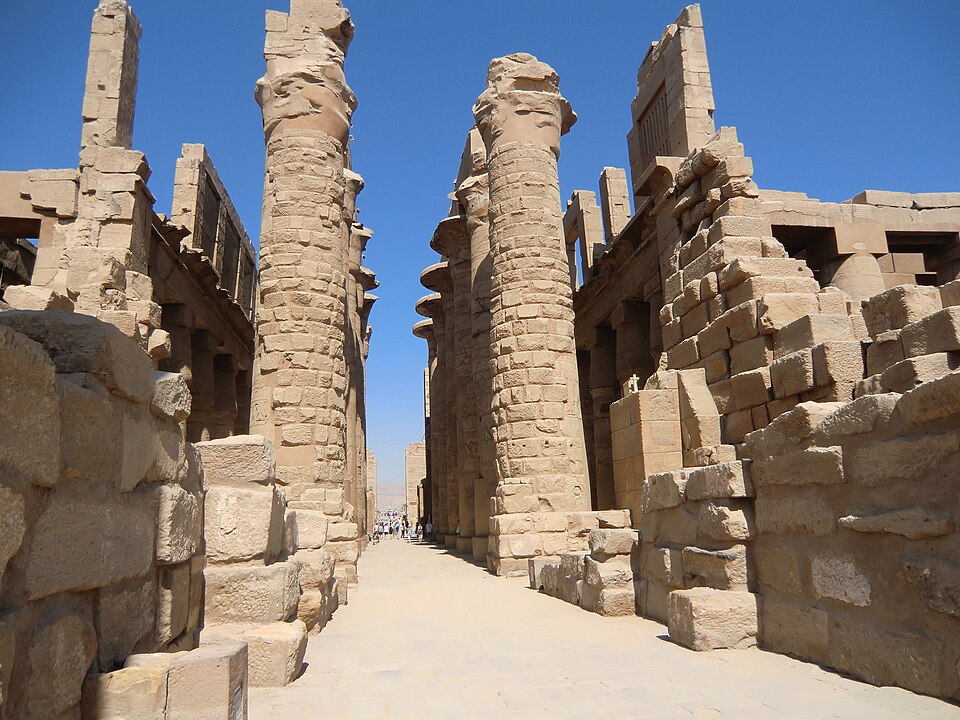
The Great Hypostyle Hall contains 134 columns. Its twelve larger central columns have open papyrus-shaped capitals, while the smaller surrounding columns use closed-bud forms. The different heights supported a raised central zone, allowing light through stone windows above the lower parts of the hall.
How to recognise it
- Dense rows of massive carved columns resemble a stone forest.
- Some capitals spread outward like open papyrus flowers.
- Obelisks and enormous gateways appear among the temple courts.
Look twice: a useful comparison
Karnak and Luxor Temple are separate sites in the same city. A close view of Egyptian columns can resemble either. Look for Karnak’s densely packed hypostyle hall and inspect the photographed sector; generic sandstone, hieroglyphs or a single obelisk are not enough to decide.
A detail worth remembering
The hall uses two papyrus forms: open flowers on the larger central columns and closed buds on the smaller ones. This is both a recognition clue and part of its design. The taller middle zone created space for windows that admitted light into the immense hall.