Where is Abu Simbel Temples?
Abu Simbel Temples is in Abu Simbel, Egypt, in Africa. The game uses the reference point shown below: 22.3369°, 31.6258°. A guess within 25 km earns the full distance score before any hint deduction.
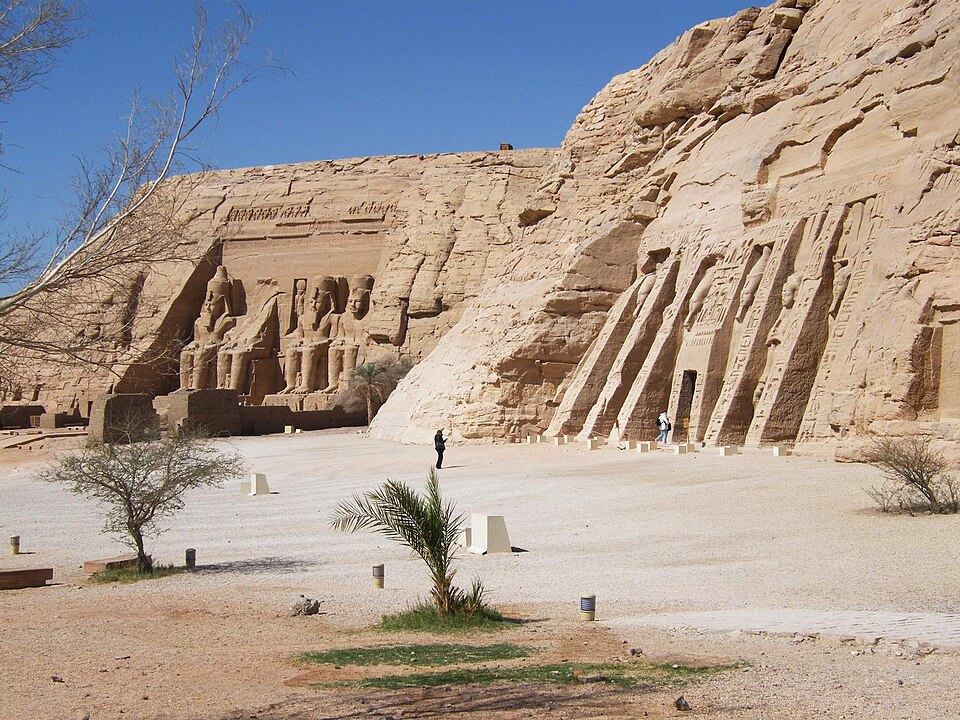
The pin marks the relocated Abu Simbel temples on the shore of Lake Nasser; the main game view is the Great Temple.
Map loading. Coordinates: 22.3369°, 31.6258°.
The story behind the landmark
Ramesses II commissioned the temples in the thirteenth century BCE. The Great Temple honoured several deities and the deified king, while the Small Temple honoured Hathor and Queen Nefertari. Their façades combine royal imagery with the rock itself, so the setting forms part of the architectural effect.
The rising waters associated with the Aswan High Dam threatened the temples. An international campaign led by UNESCO dismantled them into blocks and reassembled them at a higher location, within an artificial cliff. The relocated site was inaugurated in September 1968, preserving the monuments above Lake Nasser.
How to recognise it
- Four enormous seated royal figures flank the Great Temple entrance.
- One of the four Great Temple colossi is partly collapsed.
- The façade emerges from a rock face rather than a freestanding columned building.
Look twice: a useful comparison
Photographs can show either temple. The Great Temple has four seated colossi; the smaller neighbouring temple presents standing royal figures. Do not reject Abu Simbel because the composition differs from the famous main façade, but check that the displayed image and article identify the same temple.
A detail worth remembering
During the rescue, the temples were cut into numbered blocks, moved and carefully reassembled. The cliff seen around them today incorporates the relocation works. Their preservation story makes the photographed setting historically important as well as visually memorable.