Where is Palacio de Bellas Artes?
Palacio de Bellas Artes is in Mexico City, Mexico, in North America. The game uses the reference point shown below: 19.4352°, -99.1412°. A guess within 25 km earns the full distance score before any hint deduction.
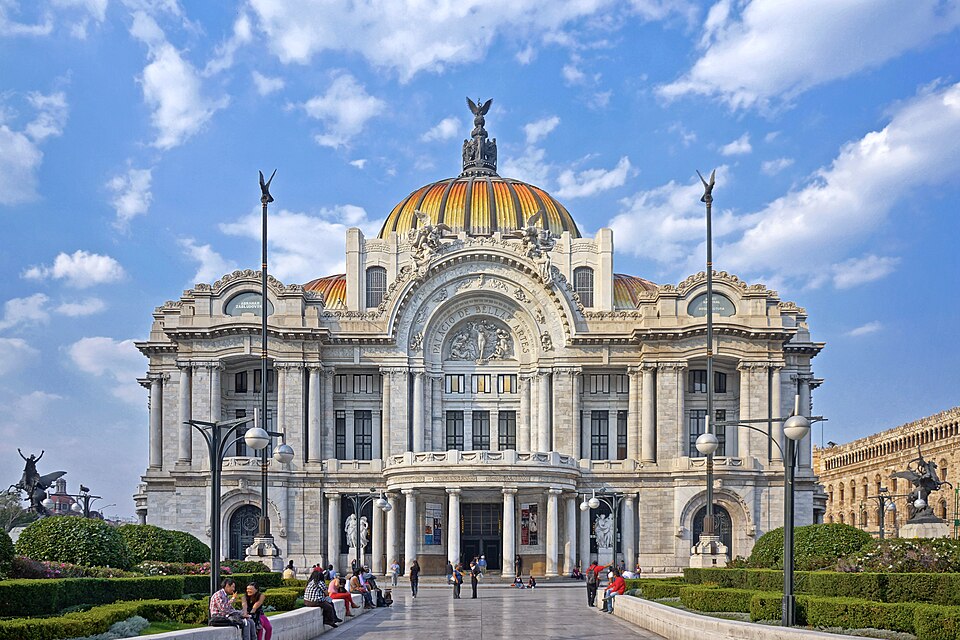
The reference point is the Palacio de Bellas Artes beside Alameda Central in Mexico City.
Map loading. Coordinates: 19.4352°, -99.1412°.
The story behind the landmark
Work began in 1904 under architect Adamo Boari, originally for a new National Theatre. Technical and financial problems, followed by the Mexican Revolution, delayed completion. Boari left Mexico in 1916 before the project was finished, and the building’s final form emerged from a later construction phase.
Federico Mariscal brought the project to completion, and the palace opened on 29 September 1934. Its Art Nouveau exterior and Art Deco interior reflect the different phases of design. The change from theatre to Palace of Fine Arts also expressed a wider role as a national artistic institution.
How to recognise it
- White stone walls and sculpture frame a broad classical-looking front.
- A large central dome has a warm orange-gold appearance.
- An arched main opening and richly ornamented roofline organize the façade.
Look twice: a useful comparison
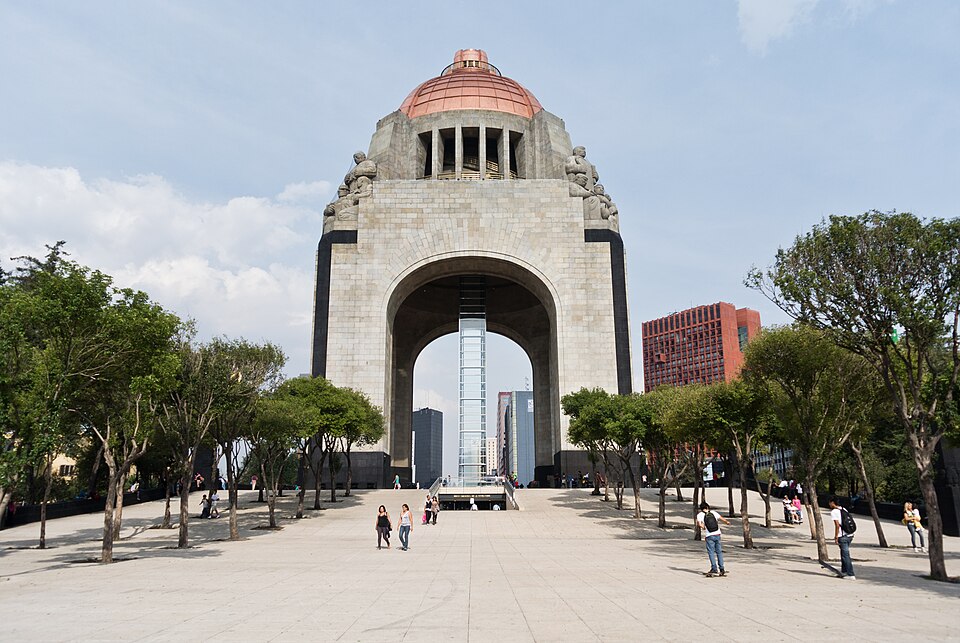
Mexico City has several monumental domes. Compare the palace’s white frontage and detailed sculpture with the open arches of the Monument to the Revolution. The roof’s warm colours are useful, but lighting can change them; the underlying shape is a stronger clue.
A detail worth remembering
The building was expected to take only a few years, but its construction history stretched across three decades. That delay helps explain the contrast between its exterior and interior styles. The finished palace records political change as well as changing architectural taste.