Where is Kinkaku-ji?
Kinkaku-ji is in Kyoto, Japan, in Asia. The game uses the reference point shown below: 35.0394°, 135.7292°. A guess within 25 km earns the full distance score before any hint deduction.
The marker identifies the Golden Pavilion within Rokuon-ji in northern Kyoto, not the whole city or a different Kyoto temple.
Map loading. Coordinates: 35.0394°, 135.7292°.
The story behind the landmark
The site began as a retreat associated with shogun Ashikaga Yoshimitsu in 1397 and became a Zen temple after his death. The original pavilion was destroyed by fire in 1950. The building seen today was reconstructed in 1955, a distinction worth remembering when describing its age.
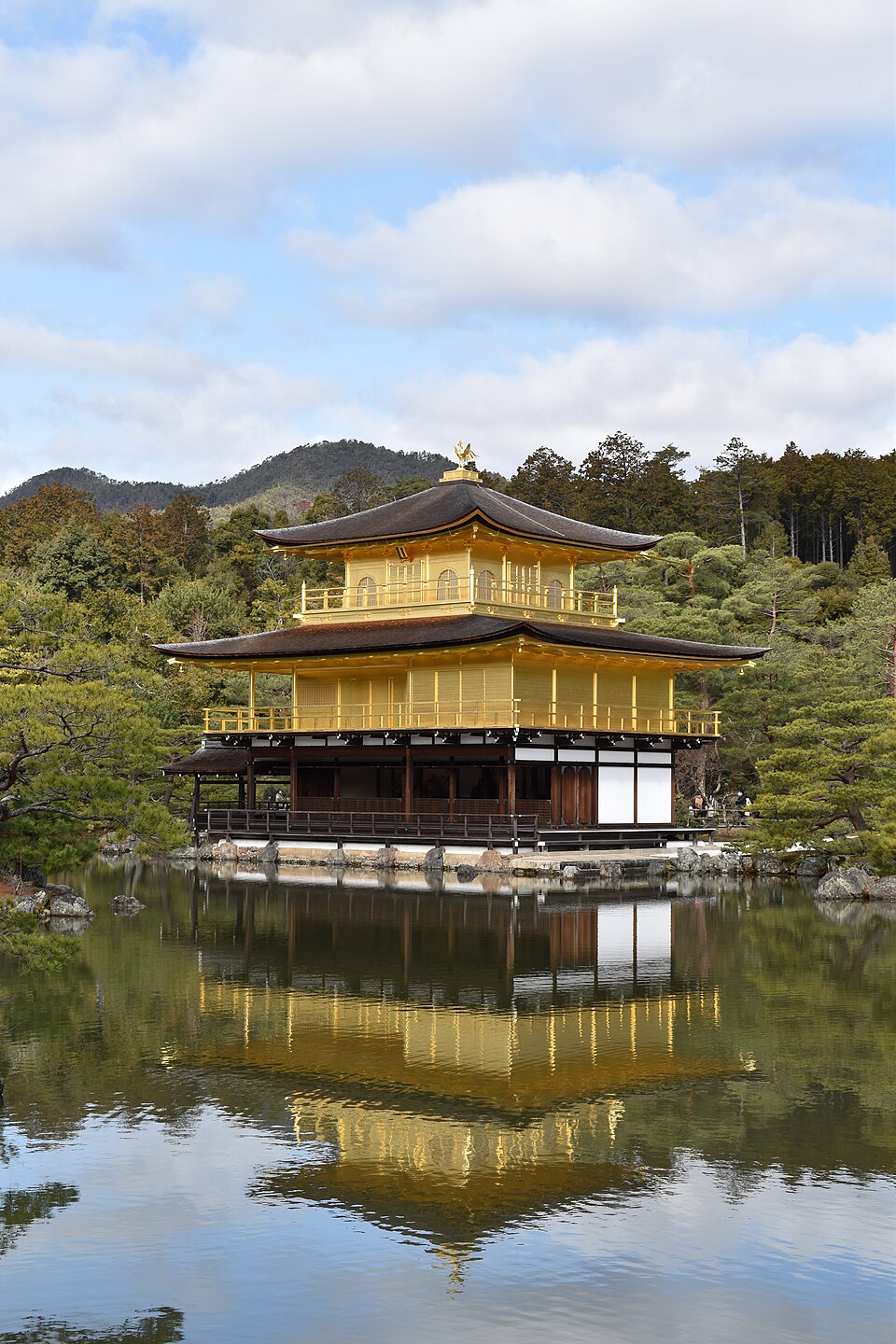
The temple's own guide explains that the three floors draw on different architectural traditions: courtly residence, warrior residence and Chinese Zen temple. Gold leaf covers the upper two floors, while a phoenix crowns the roof. The pavilion's compact form therefore combines several styles within one recognizable image.
How to recognise it
- Gold-clad upper floors above a lighter ground floor
- A three-level pavilion immediately beside a reflecting pond
- A small phoenix ornament on the top roof
Look twice: a useful comparison
Kyoto's Ginkaku-ji is called the Silver Pavilion, but its exterior does not share Kinkaku-ji's gold-covered upper levels. Do not let the paired names replace a visual check. The pond reflection, three tiers and bright gold surfaces together identify the Golden Pavilion.
A detail worth remembering
Each level follows a different architectural tradition. The result is visually unified by its proportions and roof, yet a closer examination separates the courtly lower floor, warrior-style middle floor and Zen-style upper floor.