Where is Itsukushima Shrine?
Itsukushima Shrine is in Miyajima, Japan, in Asia. The game uses the reference point shown below: 34.2958°, 132.3197°. A guess within 25 km earns the full distance score before any hint deduction.
The answer marker represents Itsukushima Shrine on Miyajima. The offshore great torii is nearby within the same landmark setting and the game's distance tolerance.
Map loading. Coordinates: 34.2958°, 132.3197°.
The story behind the landmark
The shrine's traditions reach back to the sixth century. Its influential waterside arrangement developed under Taira no Kiyomori in 1168. Japan's national tourism authority describes the pavilions as an architectural response to an island regarded as sacred, placing the shrine at the edge of land and sea.
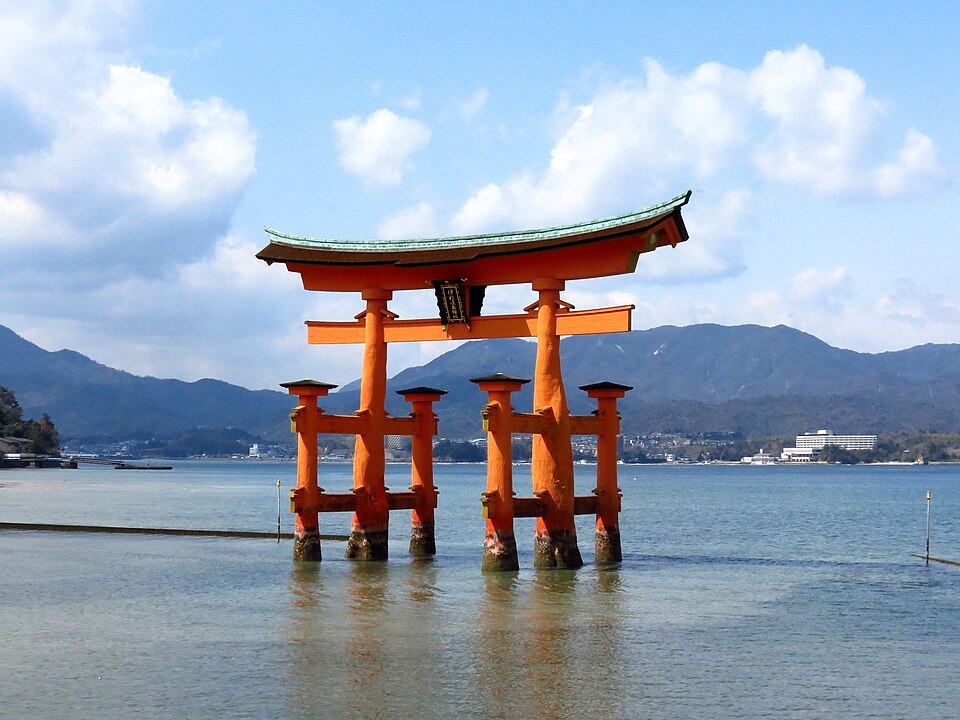
The offshore great torii was erected in 1875. It is separate from the shrine pavilions but forms part of the celebrated approach to them. Both the gate and the buildings change appearance with the tide, so photographs taken at different water levels can offer very different impressions of the same site.
How to recognise it
- A large vermilion torii standing offshore
- Long vermilion shrine corridors along a tidal shoreline
- Water or exposed tidal ground beneath the gate, depending on the tide
Look twice: a useful comparison
Japan has many red torii, including dense lines of gates at Fushimi Inari in Kyoto. Itsukushima's great gate is isolated offshore near a waterside shrine. Its location on Miyajima beside Hiroshima is also distinct from the inland Kyoto setting.
A detail worth remembering
A high-tide photograph and a low-tide photograph can make the great torii look like two different places. Learning the tidal setting prevents a common visual trap and explains why the popular description 'floating gate' is an effect of water level.